
What Morocco Reminded Me
About Home
The Moroccan spirit, and what it taught me about designing a home that welcomes you and everyone you invite in.
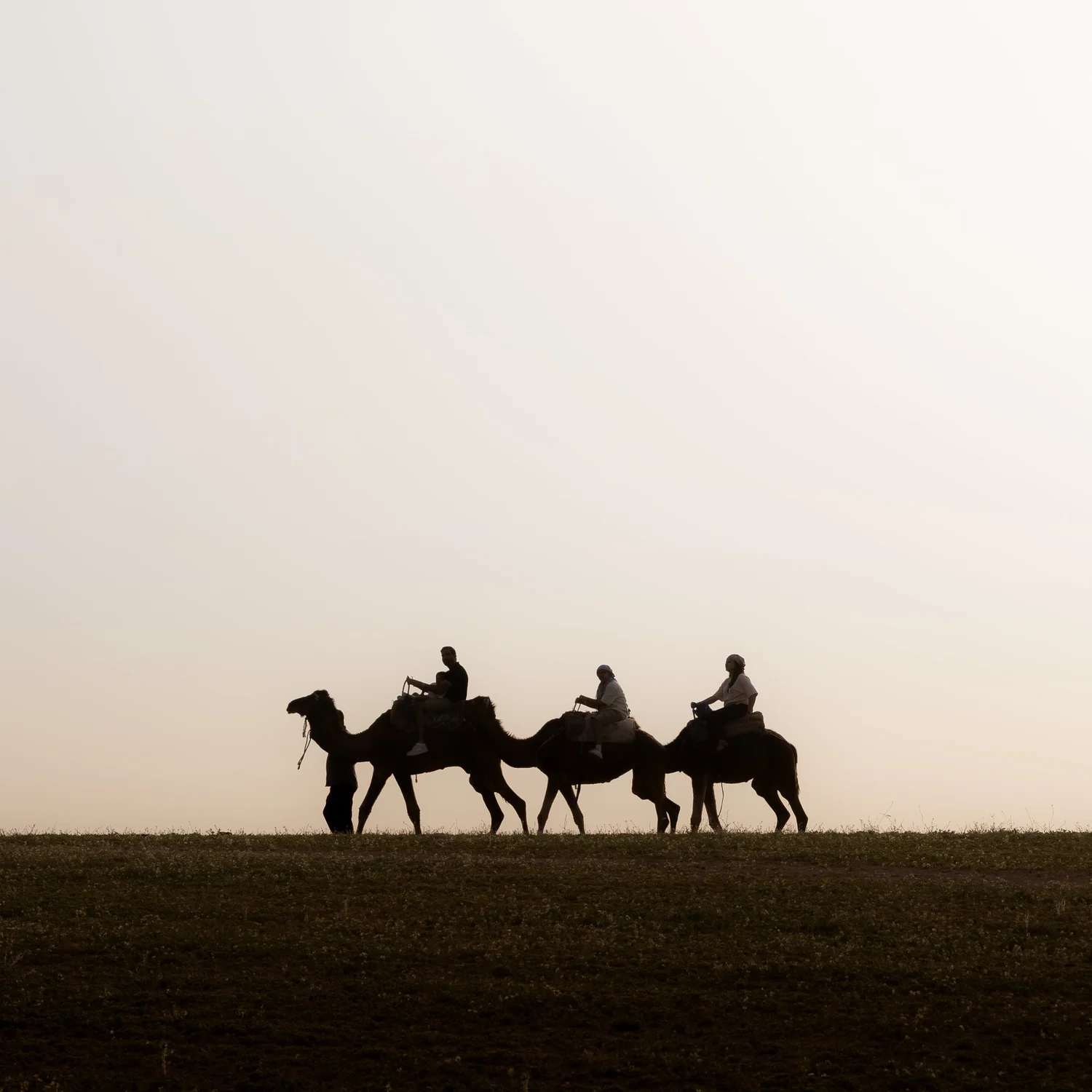
I landed in Marrakech on a Tuesday morning and started the drive to the Agafay desert almost right away, about an hour outside the city. Marrakech hits you all at once. The color, the noise, the dust, the crush of people, the terracotta walls rising at every turn. It should have been overwhelming. Instead, it made me feel alive.
The moment we reached our glamping site in Agafay, someone appeared with a traditional kettle and two glasses of tea, poured before we had even set down our bags. That is simply what you do when a person arrives. You greet them, you pour the tea, you make them feel expected, like they belong.
I grew up in Lebanon, so this welcome was familiar the moment it reached me. I knew it in my bones. The open door. The table that always finds space for one more. The kitchen that never quite stops cooking. Morocco and Lebanon are different countries with the same soul: a home is not a showpiece. It is an act of generosity.
The Colors of the Earth
About four hours from Agafay, over the High Atlas Mountains, sits Aït Benhaddou. It is a UNESCO-protected ksar, an ancient fortified town made of nothing but clay and straw, still standing after centuries. It looks like it grew straight out of the ground, molded from the very earth it stands on. We experienced it at sunrise on our first morning there, and the views were unreal. The whole place glowed like a film set, which, it turns out, it is. Aït Benhaddou has been a film set for decades, and its walls play the city of Troy in the new Odyssey movie, in theaters now.
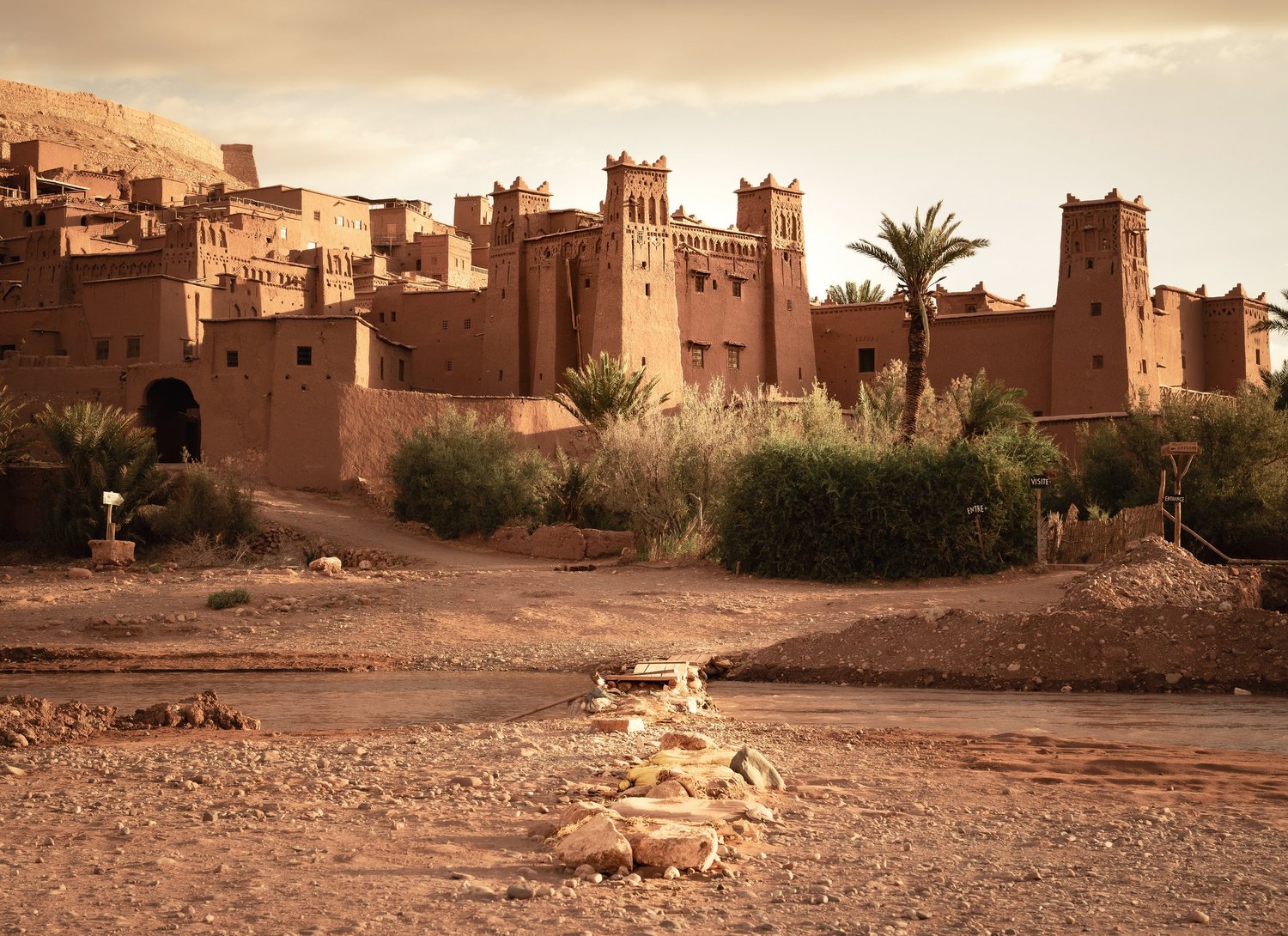
The colors and the textures stopped me. Warm ochre, sandy taupe, deep terracotta, endless shades of sand and clay. Nobody chose that palette from a fan deck. The earth chose it. It belongs there the way stone belongs to a mountain.
The Hands That Make Things
In Ourika, a town loud with color and craftsmen, I met Mohammad.
He owns a small shop with an atelier in the back. When he learned I am Lebanese and an interior designer, his whole face lit up and he pulled me straight to the back, thrilled to show me how he works. He cuts and hand-stains sheets of glass with his own dyes to build his custom light fixtures, some massive enough to anchor a whole room. He could not stop offering more, the pieces in progress, a mirror he is making with custom tilework, the story behind each one. He makes it all himself, the lamps, the pottery, the tile, every piece from scratch and every piece superb.
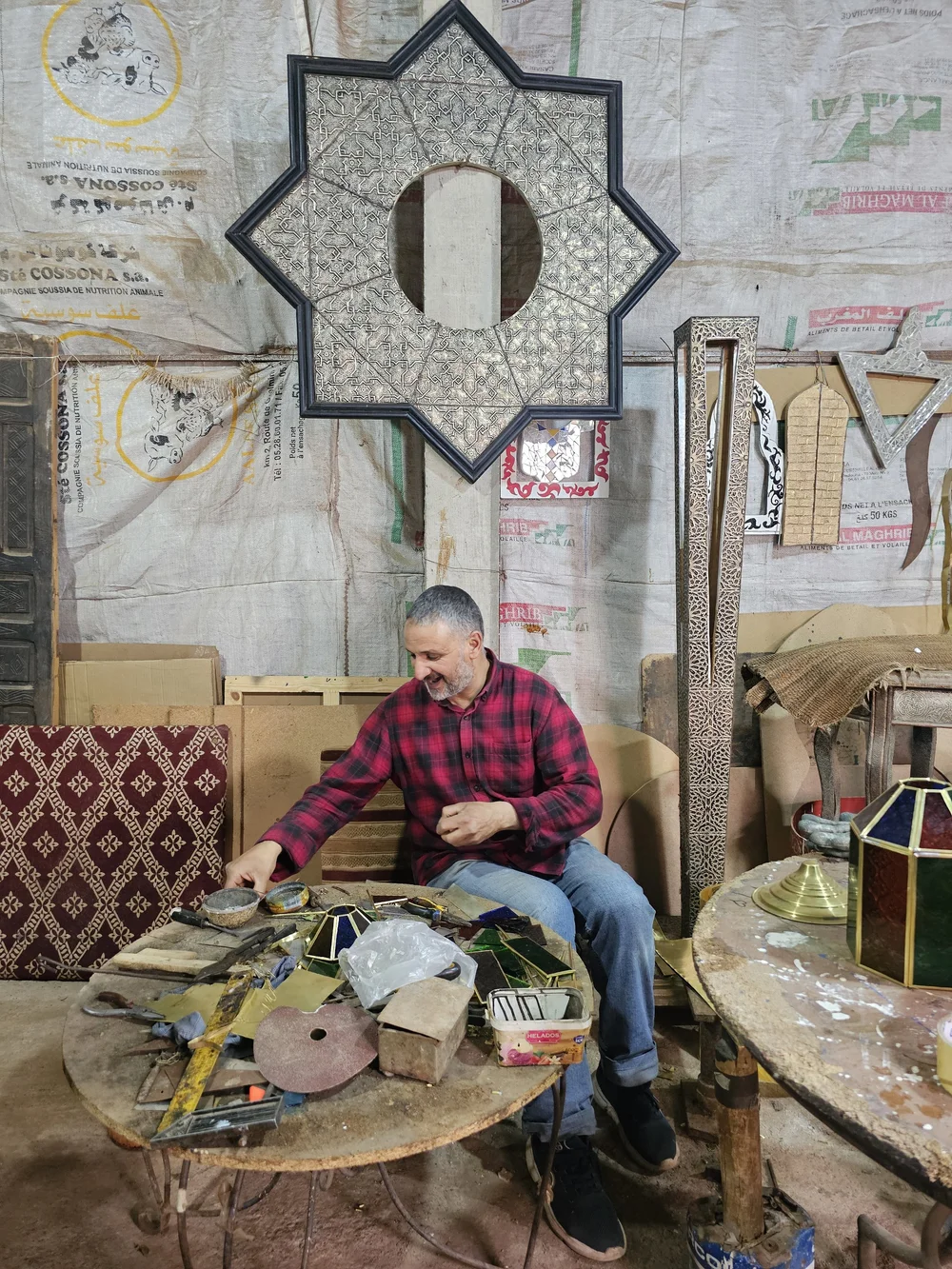
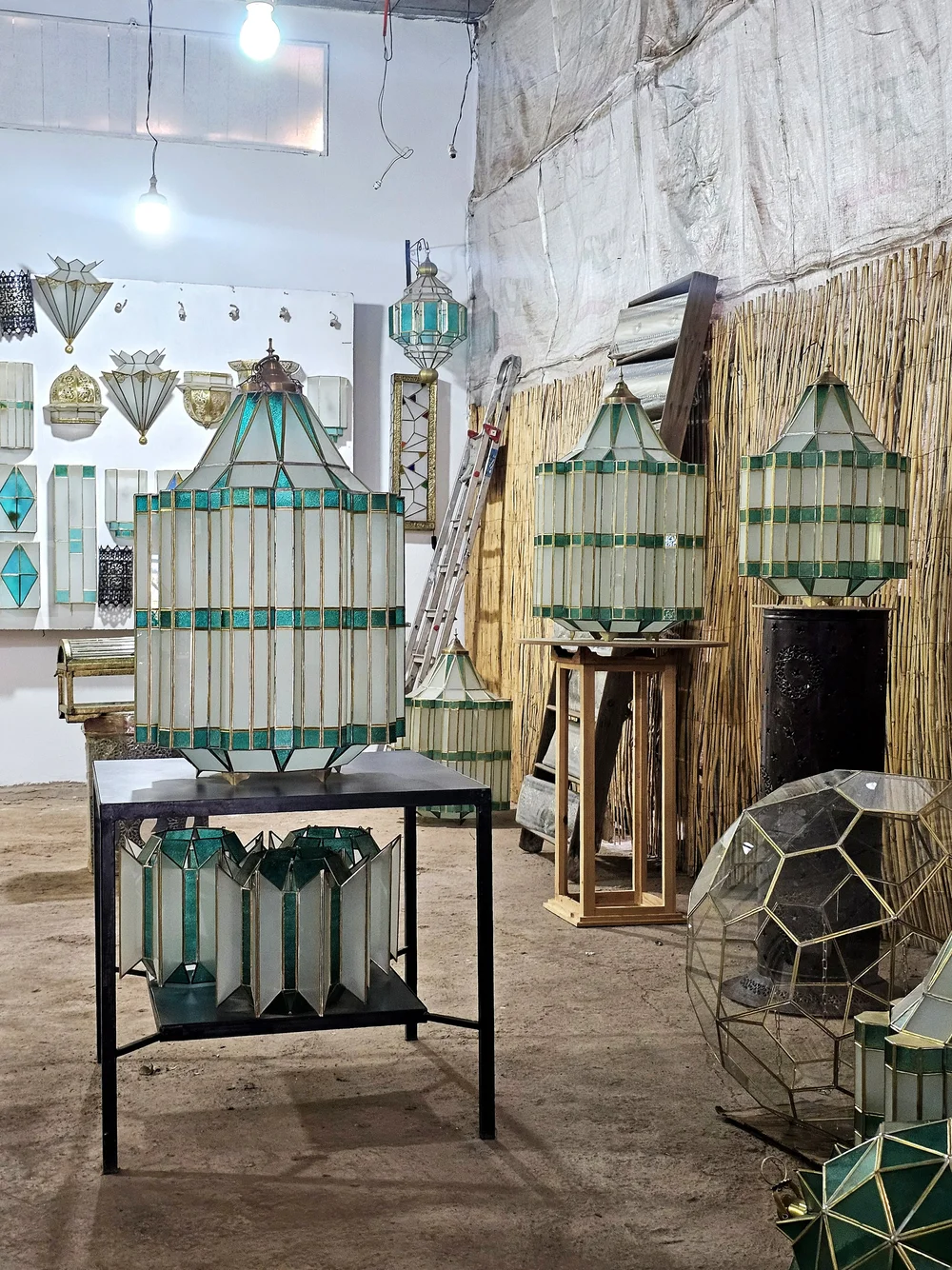
It was one of the best hours I spent in Morocco. I even met his young daughter, who loves the atelier and is already learning at his side, handing him tools, watching how it is done.
That devotion is everywhere. In the Marrakech medina, masters work in rooms the size of a closet, turning out shoes, belts, poufs, mirrors, lamps. Tiny space, enormous skill. The carved cedar, the hammered brass, the hand-loomed textiles that designers everywhere now specify were all perfected here, centuries before the rest of us caught on. Craft is not a job in Morocco. It is a whole life.
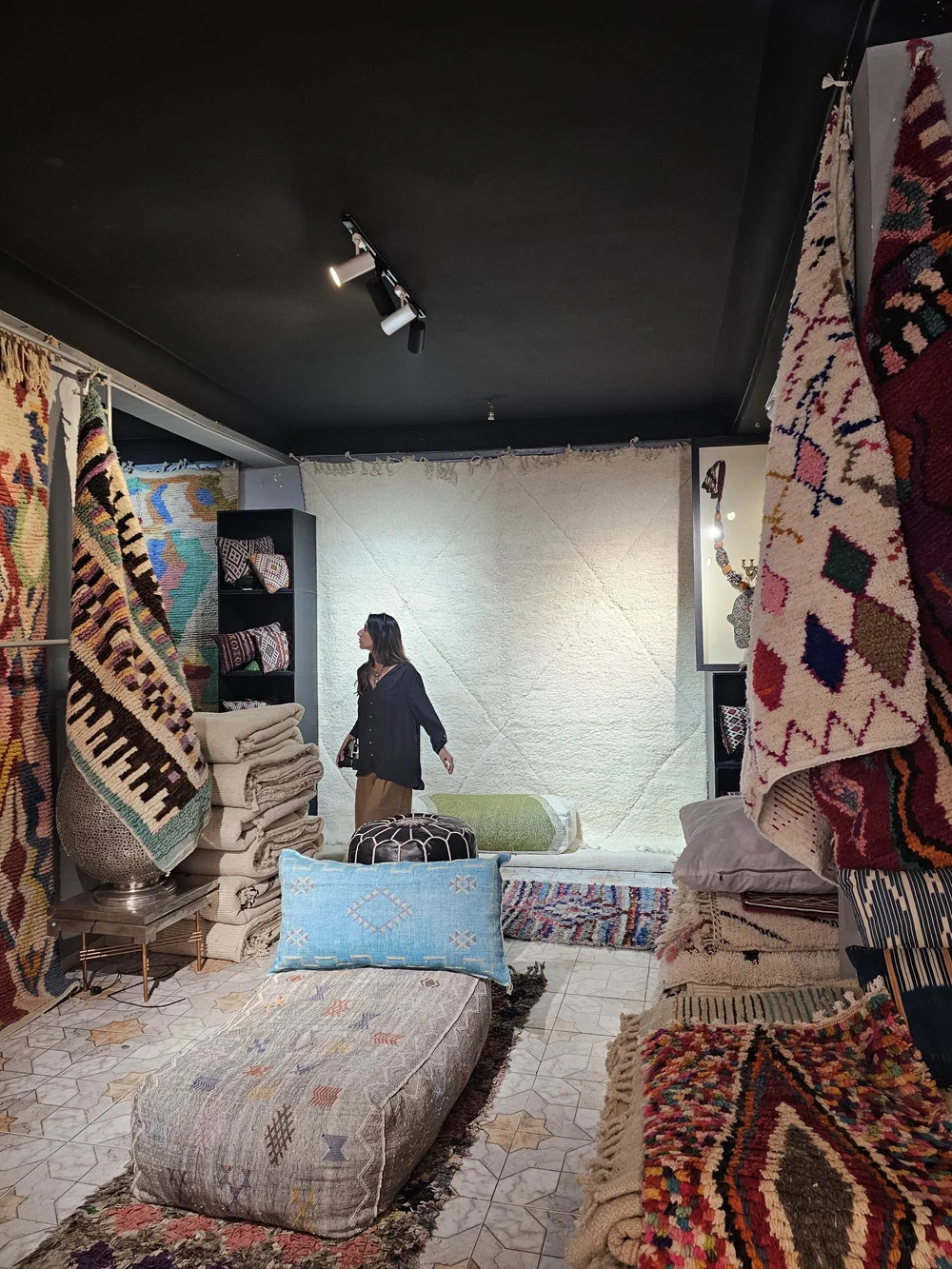
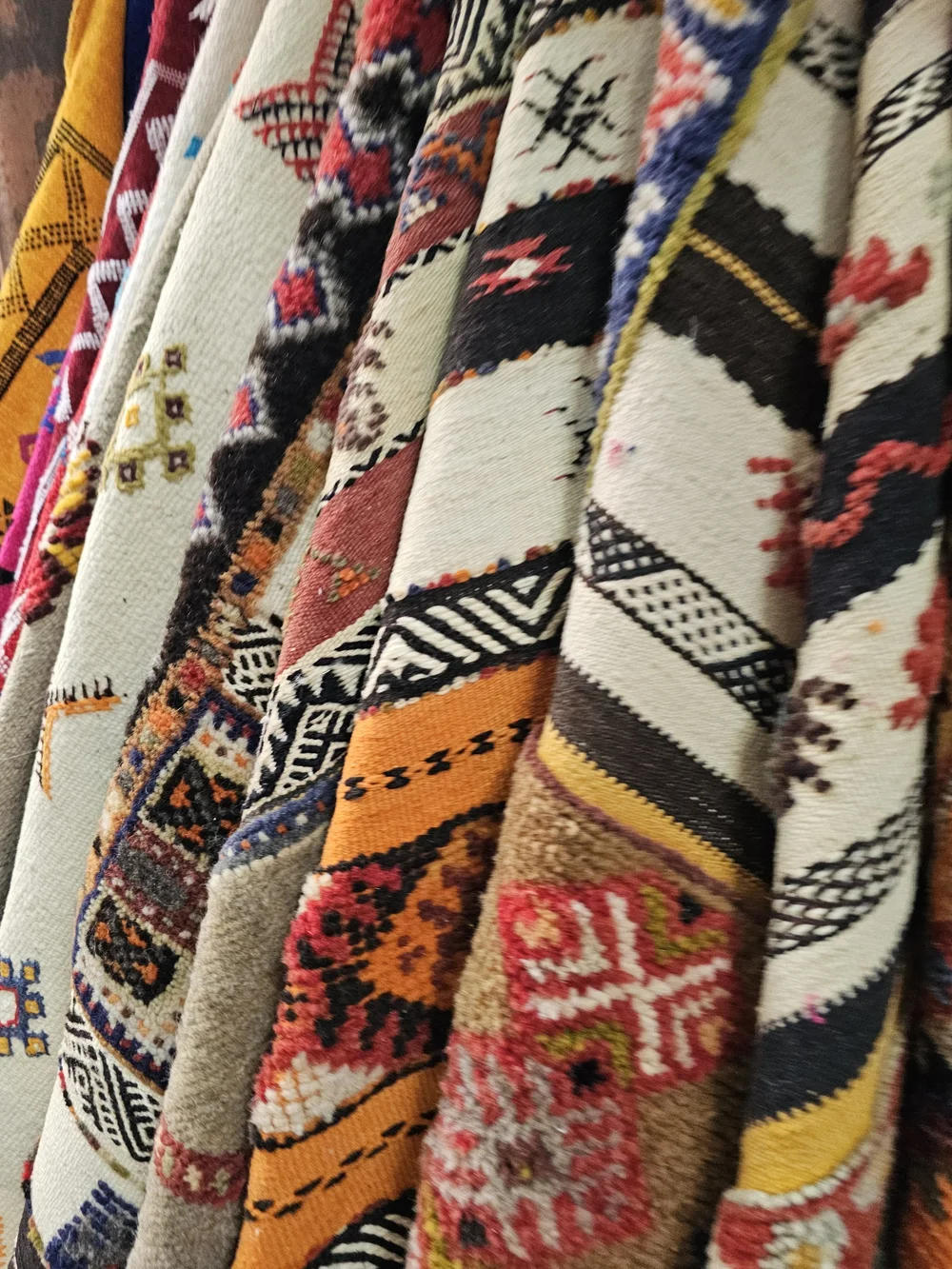
And here is what most visitors never see. The men are the faces in the market, but much of the artistry happens behind walls, in the hands of women. Across the Atlas Mountains the rugs are made almost entirely by them. They wash the wool, spin it, dye it with pomegranate and indigo, and weave it, a skill passed mother to daughter with no school, only memory. They weave their own lives in too. A Berber rug is sometimes called the weaver's diary, every symbol a quiet note about marriage, motherhood, protection, hope. You could hang one on a wall and never realize you were reading someone's story.
“A home is not a showpiece. It is an act of generosity.”
The Home as a Welcome
Driving between Moroccan cities was its own kind of enrichment, and after each long day on the road and on foot, we would land in a riad somewhere new. We arrived, someone appeared, tea was poured, and the whole building seemed to exhale around us.
The riad might be the most radical architecture I know, precisely because it keeps all its beauty for the inside. From the street it stays humble, a plain door in a plain wall. Everything turns inward, around a courtyard open to the sky. The walls are thick and cool, finished in tadelakt, the hand polished plaster with a glow you want to touch. Zellige tile runs underfoot in patterns cut by hand. Light falls straight into the center of the house and moves across the day like a slow hand.
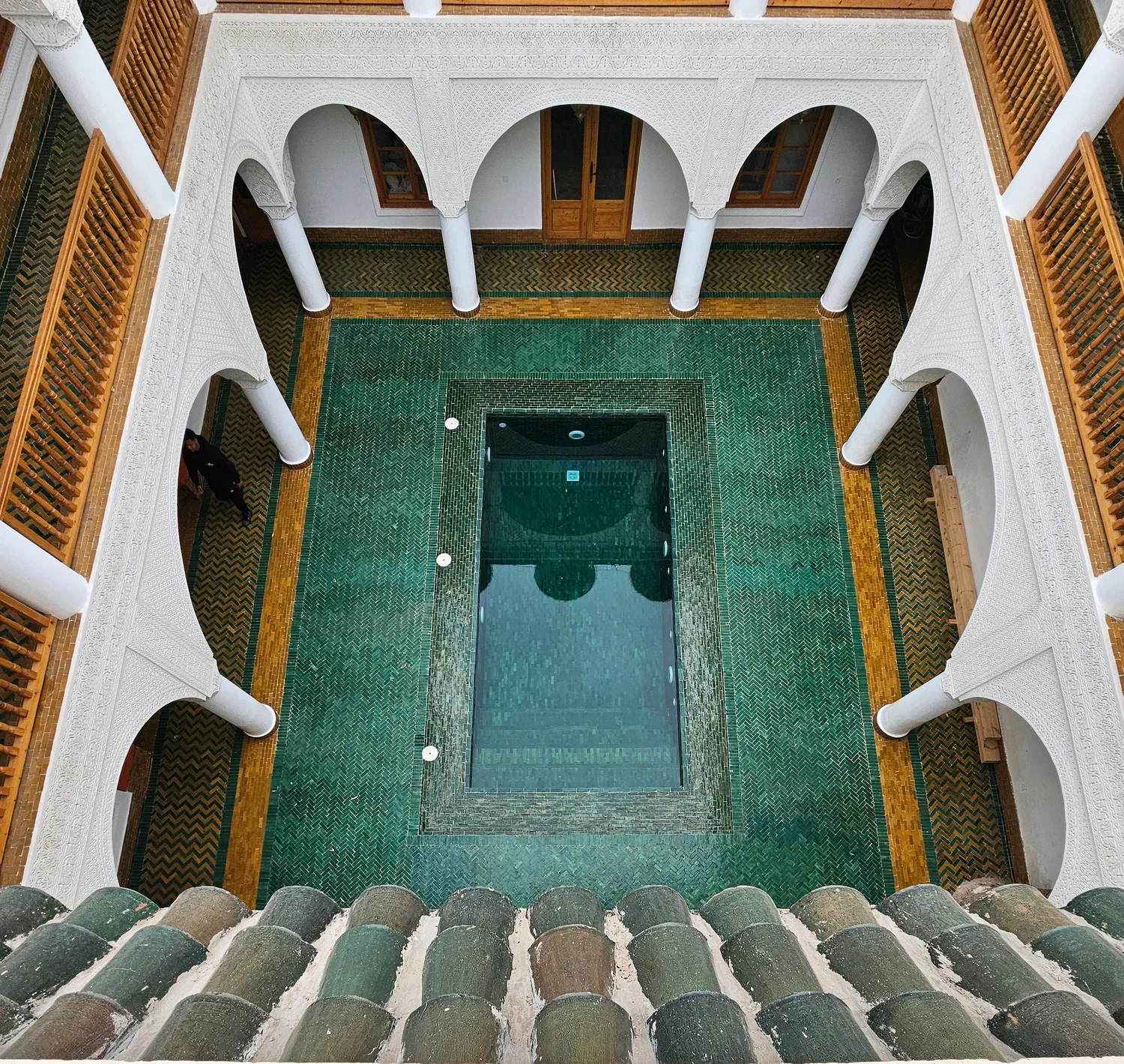
Every gesture points inward, toward the people inside and everyone they welcome in. That is a design philosophy as much as a floor plan. A home built for the people who live there. Full stop.
What It Made Me Think About
So many homes today look right and still feel empty. I see it constantly. Morocco set the standard for the opposite: homes built entirely around the people within their walls, tailored to how they live, what they need, and what brings them joy. Morocco showed me how it is done, and reinforced everything I believe about bringing a space to life through history, craft, and soul.
That life comes from layering. Much of it is aesthetic, and that matters a lot. A handmade bowl on a modern shelf, an old rug under new furniture. But the deeper layering is personal. Your history, your culture, the places that moved you. If your family came from somewhere, bringing that artistry home is not decoration. It is remembering.
The homes I love most, the ones clients still call me about years later, all carry something like that. A material that means something. A texture that feels like memory. A lamp made by a man whose name you know.
How We Can Help
Morocco left me with a question I now carry into every project: does your home welcome you the moment you walk in, and open its arms to your guests just the same? That feeling of belonging is the work we love most, and it is exactly what our studio is built to do. When we design a home together, we are really doing a few things:
- Starting with you. Before we choose a single material, we want to understand how you live, where you come from, and what makes a space feel like yours. Your story becomes the brief.
- Designing the bones. As interior architects, we plan how rooms flow and how you and your guests move through them, so the home works the way your life actually works.
- Layering with meaning. We bring in materials, textures, and pieces that carry something real, including the artistry of your own heritage, so every choice in the room means something.
- Leaving room to grow. A home should evolve as you do, so we design spaces that can shift and deepen over time.
Let’s build a home together that welcomes you the moment you walk in, and everyone you invite in.